











In many parts of rural India, children’s futures depend not just on opportunity, but on access to basic healthcare. While vaccines are one of the most effective tools to protect children from life-threatening diseases, they are still not reaching every child who needs them. And often, the barrier is not availability, but hesitation.
According to the National Family Health Survey-5 (NFHS-5), even as India’s overall immunization coverage has improved to 76.4%, in some underserved rural communities, nearly 4 in 5 caregivers still show some level of vaccine hesitancy.
In this blog, we explore what is vaccine hesitancy, the reasons behind it, its impact on children’s health, and what CRY America is doing to address it in India.
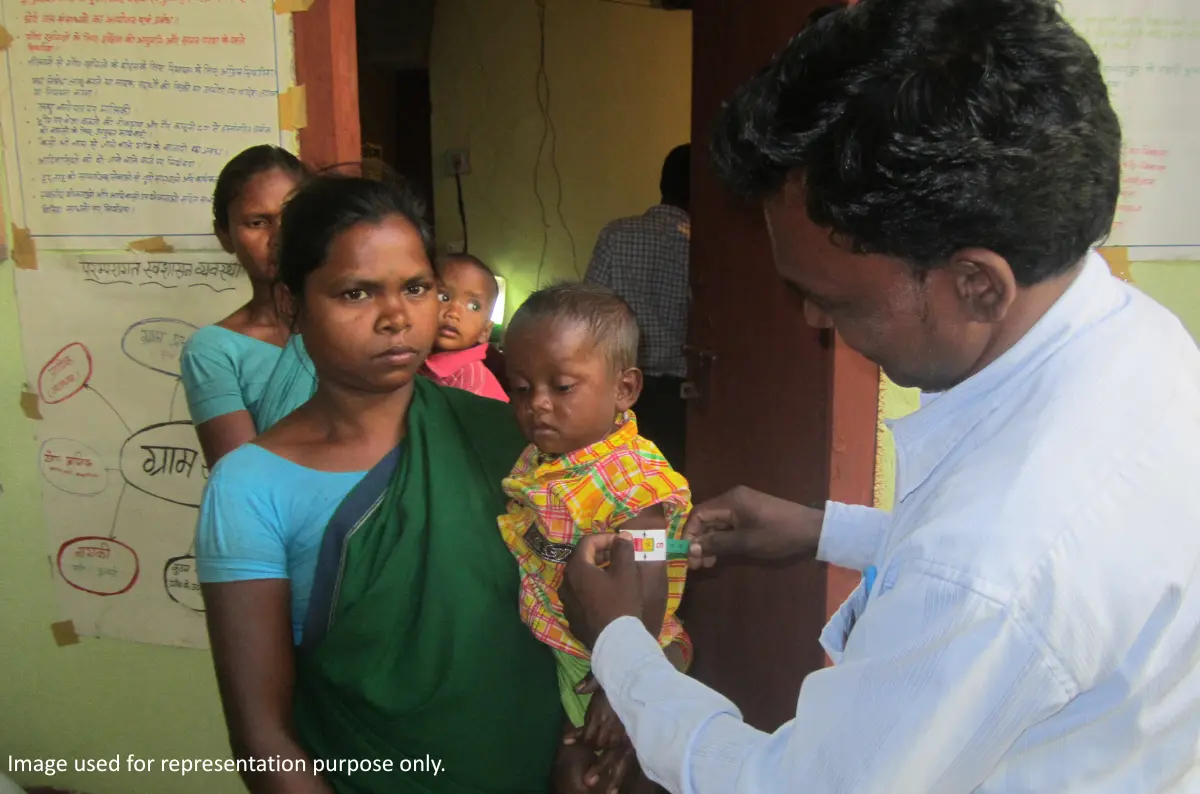
Vaccine hesitancy definition
Vaccination plays a crucial role in protecting pregnant and lactating women, while also helping build early immunity in infants during their most vulnerable stages of life.
Vaccine hesitancy refers to a delay in acceptance or refusal of vaccines despite their availability. It reflects uncertainty, fear, or lack of confidence in getting vaccinated on time.
This hesitation can affect different groups:
Pregnant women: Missing recommended vaccines can increase health risks for both the mother and the unborn child.
Lactating mothers: Limited awareness or concerns may affect postnatal care and indirectly influence infant health.
Infants and young children: Delayed or missed vaccinations leave them unprotected against preventable diseases during critical early years.
Also Read: Vaccines & Newborns: Why Immunization Is Key to Infant Survival
Causes of vaccine hesitancy in rural India
Vaccine hesitancy in India is shaped by a mix of information gaps, access challenges, and social influences.
- Misinformation and myths: Concerns around safety and side effects often stem from incomplete or incorrect information.
- Limited awareness: Many families are unaware of vaccination schedules or the long-term benefits of immunization.
- Cultural beliefs and norms: Deep-rooted practices and community influences can discourage timely medical intervention.
- Barriers to access: Distance, irregular services, and logistical challenges make it harder to follow through on vaccinations.
- Lack of trained frontline workers: Without support to simplify medical information, families may find it harder to understand and trust vaccination guidance.
- Lack of trust: Past experiences or limited engagement with healthcare systems can affect confidence in vaccines.
Also Read: Anemia in Rural Children: A Health Problem We Can’t Ignore
The impact on children’s health
The consequences of vaccine hesitancy are far-reaching and, at times, irreversible. Children who miss routine immunizations are at a higher risk of contracting diseases such as measles, polio, and tuberculosis, many of which can be fatal or lead to lifelong complications.
But the impact doesn’t stop there.There is a strong link between vaccination and nutrition. According to the National Institutes of Health (US), nearly 45% of under-five mortality is directly or indirectly linked to malnutrition. When children are undernourished, their immune systems are weaker, making them more susceptible to infections. Vaccination plays a critical role in protecting these children from life-threatening diseases that their bodies are less equipped to fight.
When pregnant and lactating mothers are hesitant about vaccines, it further affects the child’s health outcomes. A lack of maternal immunization can increase the risk of infections in newborns, while missed early vaccinations leave infants unprotected during a crucial stage of development. In this way, vaccine hesitancy in India doesn’t just delay protection, it deepens cycles of poor health, vulnerability, and preventable loss.
Also Read: What Is Malnutrition
What CRY America is doing to reduce vaccine hesitancy
Addressing vaccine hesitancy requires more than just access, it requires trust, awareness, and consistent engagement. CRY America’s projects through its grassroots partners, works closely with communities to bridge this gap and ensure that every child has a fair start in life. Here’s how:
- Spreading awareness: Through door-to-door visits and community campaigns, CRY America addresses myths around vaccination and educates families about the importance of timely immunization.
- Building support systems: Through the formation of mothers’ groups and parent modules, the project team creates safe spaces for discussion, learning, and shared responsibility, ensuring that mothers and newborns are safe and healthy.
- Conducting Village Health and Nutrition Days (VHNDs): CRY America’s project teams conduct regular VHNDs to provide essential maternal and child immunization services within the community itself.
- Supporting maternal health: CRY America’s project teams identify, monitor, and support pregnant and lactating women in registering with Anganwadi centers, ensuring access to Antenatal and Postnatal (ANC care, along with vaccinations.
- Tracking children’s progress: CRY America’s project teams closely monitor newborns and children aged 0–5 to ensure they receive vaccinations on time.
- Conducting training for frontline health workers: CRY America’s project teams conduct capacity-building training to educate frontline health workers about region-specific hesitations that prevent communities from accessing vaccinations, and encourage them to simplify medical information so families feel more confident in getting vaccinated.
Conclusion
For children in rural India, the cost of this hesitation can be their health, their development, and in some cases, their lives. But change is possible.When communities are informed, supported, and engaged, hesitation can turn into acceptance, and acceptance into action. Donate now to support CRY America’s ongoing efforts to help ensure healthier, happier futures for children.
Recommended for you